Unlocking the Advantage of Assumable FHA & VA Loans

In today’s high-interest-rate environment, homebuyers are looking for every possible advantage to secure an affordable mortgage. One often-overlooked opportunity is assuming an existing FHA or VA loan, especially those issued in the past few years when interest rates were at historic lows.

An assumable loan allows a qualified buyer to take over the seller’s existing mortgage, including its remaining balance, interest rate, and repayment terms. FHA and VA loans are generally assumable, but buyers must meet the lender’s qualification standards, just like they would for a new mortgage.

With interest rates currently much higher than they were just a few years ago, assuming a loan that carries a lower-than-market interest rate can be a game-changer for buyers. Here are some key advantages:

Lower Interest Rate = Lower Monthly Payments – If the seller’s mortgage has an interest rate of 3% or 4%, assuming the loan means immediate savings compared to today’s rates, which are often above 6% or 7%. A lower rate can translate into hundreds of dollars in savings each month.

Lower Closing Costs – Unlike taking out a new mortgage, assuming an existing loan typically comes with reduced lender fees and fewer closing costs, saving the buyer thousands at the closing table.

No Need for an Appraisal – Since the buyer is taking over an existing mortgage, there’s often no need for a new appraisal, reducing both costs and potential delays in the transaction.

More of Your Payment Goes Toward Principal – Because the loan is further into its amortization schedule, a higher percentage of each payment goes toward paying down the principal rather than just interest, building equity faster.

One of the biggest hurdles with loan assumptions is that the seller’s remaining loan balance may be significantly lower than the home’s purchase price. This means the buyer must cover the difference between the sale price and the outstanding loan balance.

For example, a home is selling for $400,000 with the seller’s assumable FHA loan balance is $300,000, the buyer needs to bridge the $100,000 gap between the sale price and the assumed loan.

If a buyer doesn’t have enough cash to cover this gap, there are financing options:

  • Second Lien Financing … If the buyer puts down at least 10%, they may qualify for a second mortgage to cover the remaining difference. This could come from a conventional lender or even through owner financing.
  • Home Equity Loans or HELOCs … If the buyer can arrange temporary funding to close the assumption, they may be able to get a home equity loan or line of credit to fund the difference once the property is closed and in their name.

Navigating the Loan Assumption Process

While any FHA- or VA-approved lender can originate new loans, assumptions must be processed through the current loan servicer. Some lenders may not be familiar with the process and could discourage assumptions due to lower fees and longer processing times.

Buyers should be persistent if a lender is uncooperative, request to speak with someone who understands loan assumptions.  It is to a buyers’ advantage to work with a knowledgeable agent who is experienced with assumptions and can help negotiate financing solutions and streamline the process.

If you’re a buyer looking for lower payments in today’s market, an FHA or VA loan assumption could be an excellent opportunity. While it requires careful planning to cover the price difference, the long-term savings from a lower interest rate can make a significant impact.

Thinking about assuming a loan or selling a home with an assumable mortgage? Let’s discuss how this strategy could work for you!

Even with Today’s Rates, More Sellers Are Choosing To Move

It’s hard to let go of a 3% mortgage rate. There’s no question about it. It’s the main reason why so many homeowners have delayed their move in recent years. But here’s something to consider.

While your low rate might be ideal, it doesn’t make up being too cramped, having a staircase your knees can’t handle anymore, or being 1,000 miles from your family. And those real-life needs are pushing more sellers off the fence despite today’s rates.

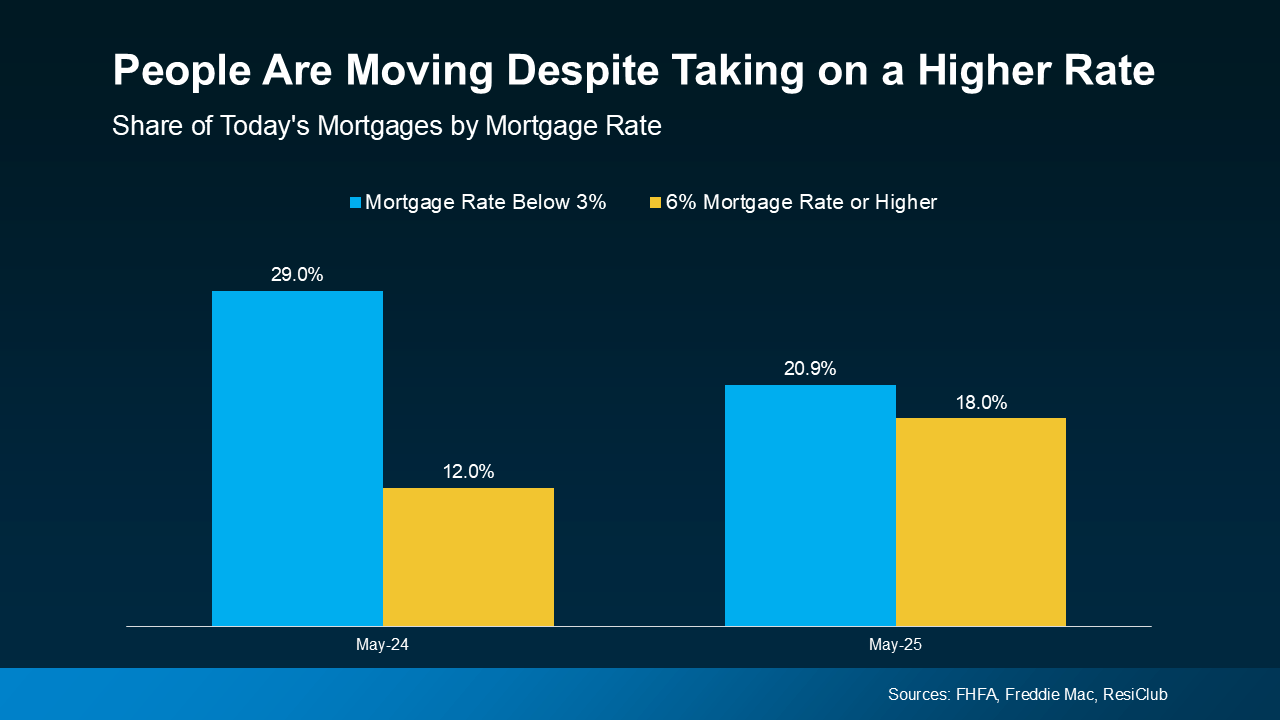
Data shows the share of homeowners with a mortgage rate below 3% is dropping as more people move. And, as a result, the share of homeowners taking on a mortgage rate above 6% is rising, too (see graph below):

The Biggest Reasons People Are Moving Right Now

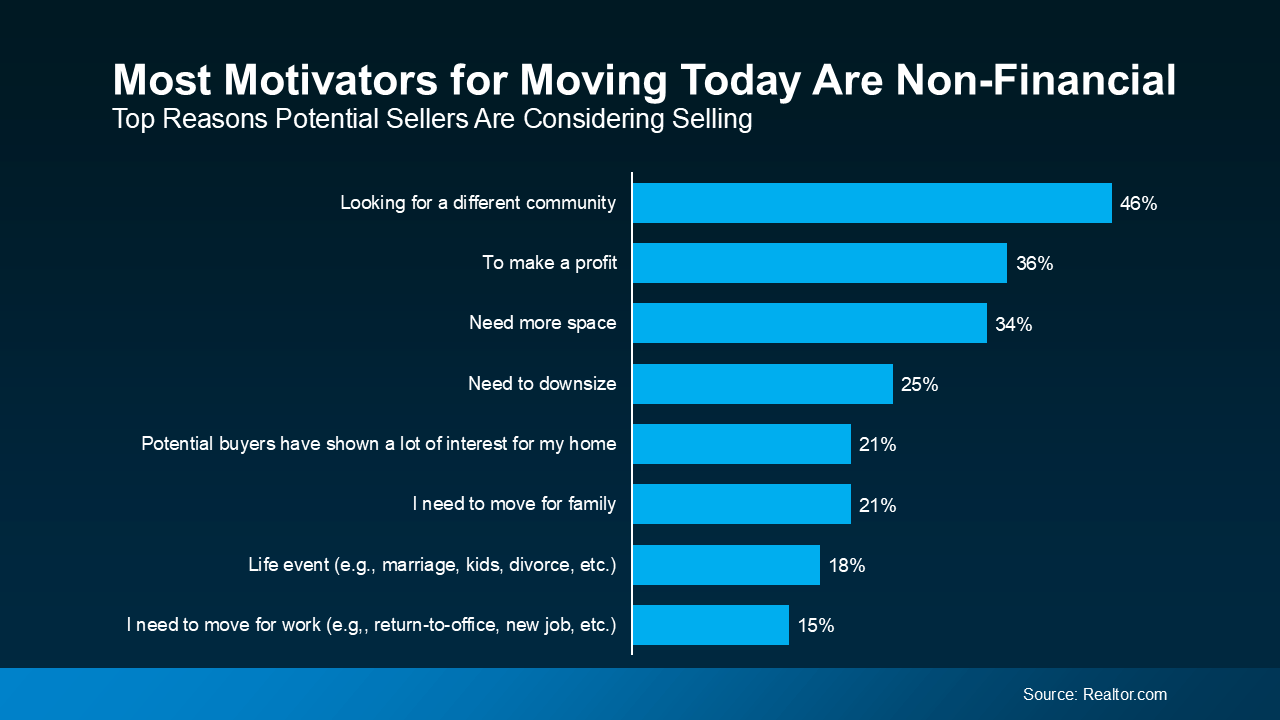
Why are some homeowners willing to take on a higher rate? A survey from Realtor.com helps shed light on that. It shows 79% of homeowners considering selling today are doing it out of necessity. And that same survey says most of the necessary reasons people are moving are non-financial in nature (see graph below):

a graph with blue textDo any of these reasons resonate for you, too?

  • You Need More Space: Whether it’s a new baby, children needing their own rooms, or having your parents move in so it’s easier to take care of them, outgrowing your space can happen fast.
  • You Need Less Space: The kids are out of the house now and you’re craving a life that’s a little simpler. Downsizing can be a major relief: fewer rooms to clean, less to maintain, and lower utility bills, too.
  • You Want to Be Closer to Family: Whether it’s to help with grandchildren or care for aging parents, sometimes the pull of being near loved ones outweighs the math.
  • A Relationship in Your Life Has Changed: Divorce, separation, or moving in together after a marriage or new partnership – all can create the need for a fresh start and a new place to call home.
  • Your Job Is Taking You Somewhere New: If you finally landed your dream job or your partner’s company is relocating, you may need to move too.

What About Mortgage Rates?

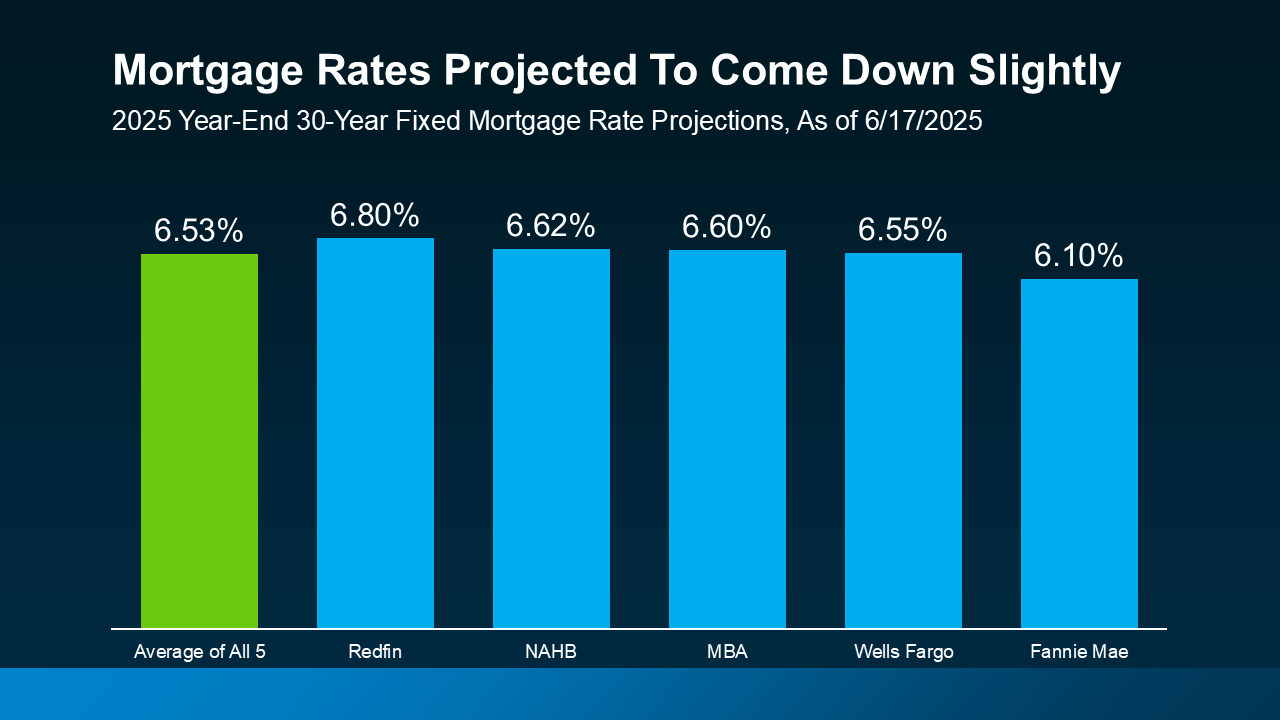
Yes, experts expect mortgage rates to ease, but slowly. The latest projections show only modest declines this year – not the 3% you may be hoping for (see graph below):

a graph of blue barsSo, while waiting for a big drop in rates might sound strategic, it could just mean more time feeling stuck in a space that no longer fits. And for many, that waiting game has already gone on long enough.

According to Realtor.comnearly 2 in 3 potential sellers have been thinking about moving for over a year. If you’re one of them, maybe it’s time to ask:

How much longer are you willing to press pause on your life?

Bottom Line

Maybe your current house fit your life five years ago. But that “for now” house you bought in 2020? It just can’t deliver on what you need in 2025. And that’s not just okay, it’s normal.

Mortgage rates are part of the equation, for sure. But the bigger question is:

What kind of home do you need to support the life you’re living now?

Let’s talk about what’s changed, and what kind of move would actually take your life forward.tips

How to Understand Today’s Mortgage Rates. Is 3% Coming Back?

A lot of buyers are pressing pause on their plans these days, holding out hope that mortgage rates will come down – maybe even back to the historic-low 3% from a few years ago. But here’s the thing: those rates were never meant to last. They were a short-term response to a very specific moment in time. And as the market finds its footing again, it’s time to reset expectations.

Back in 2020 and 2021, 3% mortgage rates gave buyers a serious boost: more affordability, more buying power, and more opportunity. But those rates were a result of emergency economic policies during the height of a global pandemic. Now that the economy is in a different place, we’re seeing mortgage rates in the high 6% to low 7% range.

And while experts currently project a slight easing in the months ahead, most industry leaders agree: rates are not going back to 3%.

Instead, many forecasts suggest mortgage rates will settle in the mid-6% range by the end of the year, pending any major economic shifts. As Kara Ng, Senior Economist at Zillow, says:

“While Zillow expects mortgage rates to end the year near mid-6%, barring any unforeseen shocks, that path might be bumpy.”

What Buyers Should Know

Basically, waiting for 3% rates might mean waiting longer than you’d expect – and missing out along the way. Instead of putting off homebuying indefinitely, make a plan to get there and focus on what you can control: your budget, your credit, and working with a trusted professional who can explain exactly what’s happening in the current market – and how to navigate it.

Your local real estate agent and a trusted lender make all the difference in this process. The experts have insights into down payment assistance programs, alternative financing options, negotiation strategies, and overall – the experience you need on your side to understand creative ways that will make your plans work.

And here’s the biggest thing to keep in mind. Since rates are projected to ease slightly later this year, if that happens, it could bring some more buyers back into the market. Acting now gives you a head start, especially with more homes on the market than we’ve seen in years.

Think about it: if mortgage rates do come down, what do you think everyone else is going to do? That’s right – they’ll jump back in too.

Getting ahead of that rush could put you in a stronger position to find the right home with less competition. Realtor.com sums it up well:

“Staying out of the market in hopes of a rate drop that never comes can lead to missed opportunities . . . Rising home prices, rent increases, and inflation might outpace any future savings on interest. And if rates do fall sharply again, buyers could face an entirely different challenge: surging competition.”

Bottom Line

Those 3% rates everyone remembers from a few years ago were the exception, not the rule.

Now that they’re settling into new territory, it’s a good time to adjust your expectations and learn more about where things are heading as this market shifts.

A local real estate agent and a trusted lender will be your best resources, always keeping you up-to-date and informed, so you can make sense of your options and build a game plan that works for you.

Creative Financing Options for Rental Investments

As experienced real estate investors reach the limits of conventional financing options, creative approaches become essential for continued portfolio growth. Here are eight innovative financing strategies to help you expand your rental property investments beyond traditional boundaries:

House Hacking offers a clever entry point for investors looking to maximize their purchasing power. By utilizing owner-occupied loans like FHA or VA, you can secure a property with minimal down payment and favorable terms. The strategy involves living in the property initially, then transitioning it to a rental once you’ve met occupancy requirements. This approach not only provides a cost-effective way to acquire property but also allows you to gain hands-on landlord experience while building equity.

Seller Financing presents a flexible alternative to traditional mortgages. By negotiating directly with the property owner, you can often secure more favorable terms, including lower down payments and interest rates. This method can be particularly advantageous when dealing with motivated sellers or in markets where conventional financing is challenging. Seller financing agreements can be tailored to suit both parties, potentially offering a win-win situation for buyer and seller alike.

Portfolio Loans cater specifically to real estate investors, especially those managing multiple properties. Unlike conventional loans sold on the secondary market, portfolio lenders retain these loans in-house, allowing for more flexible underwriting criteria. This can be particularly beneficial for investors with complex financial situations or those seeking to finance properties that don’t meet standard lending guidelines. Portfolio loans often consider the overall strength of your investment portfolio rather than focusing solely on individual property metrics.

Private Money Lending taps into the resources of individual investors or small groups willing to fund your real estate purchases. These arrangements often offer faster approval and closing processes compared to traditional lenders. While interest rates may be higher, the speed and flexibility of private money can be invaluable in competitive markets or for time-sensitive deals. Cultivating relationships with private lenders can provide a reliable source of capital for future investments.

The BRRRR Strategy (Buy, Rehab, Rent, Refinance, Repeat) is a powerful method for building a rental portfolio with limited capital. This approach involves purchasing distressed properties at below-market prices, renovating to increase value, renting to establish cash flow, then refinancing to extract equity for the next investment. The BRRRR method allows investors to recycle their initial capital, potentially growing their portfolio faster than with traditional buy-and-hold strategies.

Cross Collateralization leverages equity from properties you already own as collateral for new loans. This strategy can significantly reduce the need for large cash down payments on new acquisitions. By using existing equity, investors can expand their portfolios more rapidly. However, it’s crucial to carefully consider the risks, as multiple properties may be at stake if financial difficulties arise.

Hard Money Loans provide short-term financing options ideal for quick purchases or properties requiring significant renovation. While these loans typically come with higher interest rates, they offer rapid approval and closing processes, which can be crucial in competitive markets. Hard money lenders focus primarily on the property’s potential value rather than the borrower’s creditworthiness, making them an attractive option for deals that might not qualify for conventional financing.

Partnerships and Joint Ventures allow investors to combine resources and expertise. By teaming up with other investors, you can pool capital, share risks, and leverage complementary skills. This approach can be particularly effective for larger or more complex investments that might be out of reach for individual investors. Clear agreements outlining roles, responsibilities, and profit-sharing are essential for successful partnerships.

As you explore these creative financing options, remember that each strategy carries its own set of risks and rewards. Careful due diligence, thorough financial analysis, and possibly consultation with legal and financial professionals are crucial steps in determining the best approach for your investment goals and circumstances.

Download our Rental Investment information guide.

Read This First if You Are Thinking about an Adjustable-Rate Mortgage!

If you’ve been house hunting lately, you’ve probably felt the sting of today’s mortgage rates. And it’s because of those rates and rising home prices that many homebuyers are starting to explore other types of loans to make the numbers work. And one option that’s gaining popularity? Adjustable-rate mortgages (ARMs).

If you remember the crash in 2008, this may bring up some concerns. But don’t worry. Today’s ARMs aren’t the same. Here’s why.

Back then, some buyers were given loans they couldn’t afford after the rates adjusted. But now, lenders are more cautious, and they evaluate whether you could still afford the loan if your rate increases. So, don’t assume the return of ARMs means another crash. Right now, it just shows some buyers are looking for creative solutions when affordability is tough.

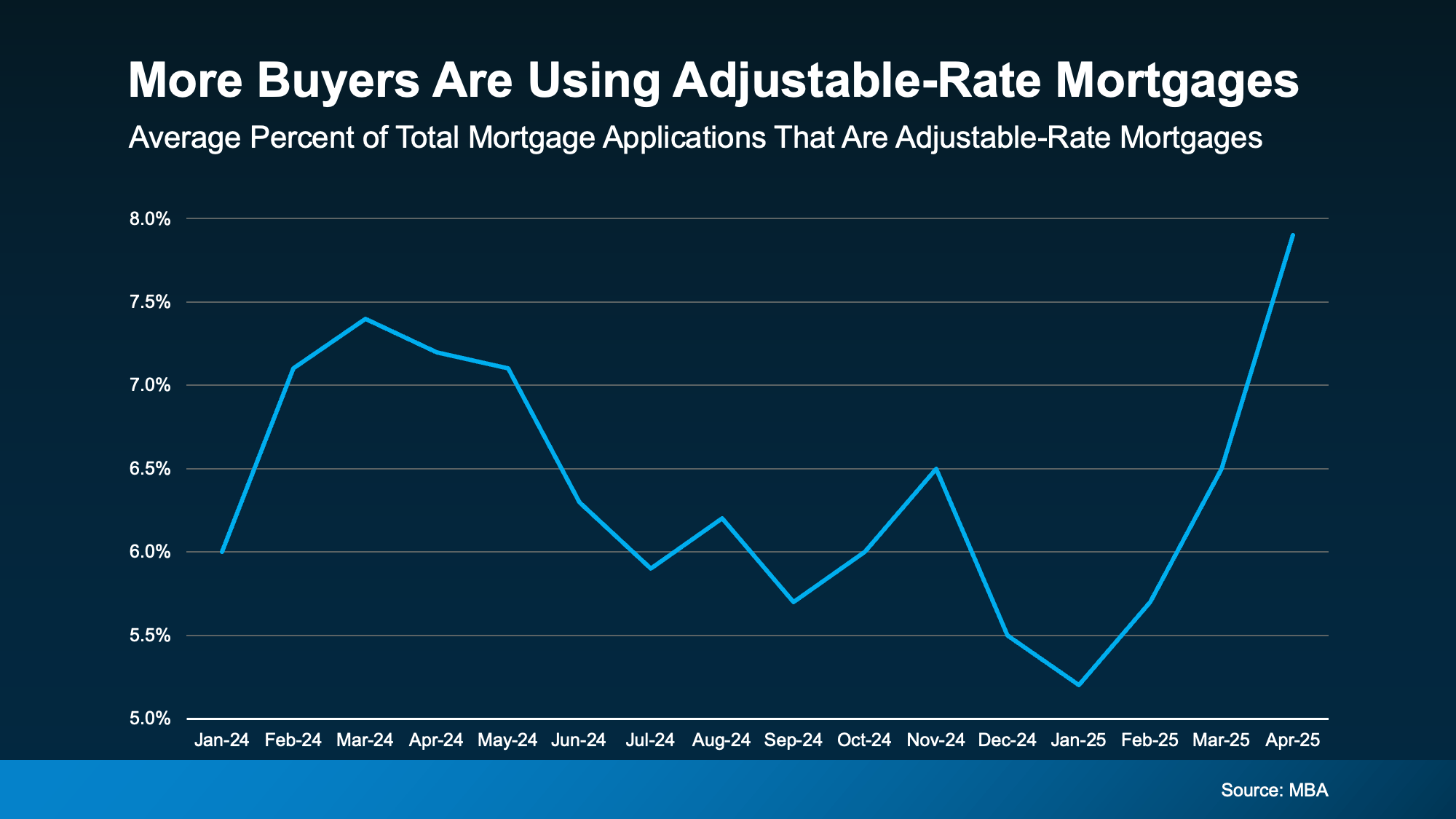
You can see the recent trend in this data from the Mortgage Bankers Association (MBA). More people are opting for ARMs right now (see graph below):

a graph showing a lineAnd while ARMs aren’t right for everyone, in certain situations they do have their benefits.

How an Adjustable-Rate Mortgage Works

Here’s how Business Insider explains the main difference between a fixed-rate mortgage and an adjustable-rate mortgage:

“With a fixed-rate mortgage, your interest rate remains the same for the entire time you have the loan. This keeps your monthly payment the same for years . . . adjustable-rate mortgages work differently. You’ll start off with the same rate for a few years, but after that, your rate can change periodically. This means that if average rates have gone up, your mortgage payment will increase. If they’ve gone down, your payment will decrease.”

Of course, things like taxes or homeowner’s insurance can still have an impact on a fixed-rate loan, but the baseline of your mortgage payment doesn’t change much. Adjustable-rate mortgages don’t work the same way.

Pros and Cons of an ARM

Here’s a little more information on why some buyers are giving ARMs another look. They offer some pretty appealing upsides, like a lower initial rate. As Business Insider explains:

“Because ARM rates are typically lower than fixed mortgage rates, they can help buyers find affordability when rates are high. With a lower ARM rate, you can get a smaller monthly payment or afford more house than you could with a fixed-rate loan.”

On the flip side, just remember, if you have an ARM, your rate will change over time. As Barron’s explains there’s the potential for higher costs later:

“Adjustable-rate loans offer a lower initial rate, but recalculate after a period. That is a plus for borrowers if rates come down in the future, or if a borrower sells before the fixed period ends, but can lead to higher costs if they hold on to their home and rates go up.”

So, while the upfront savings can be helpful now, you’ll want to think through what could happen if you’re still in that home when your initial rate ends. Because while projections show rates are expected to ease a bit over the next year or two, no forecast is guaranteed.

That’s why it’s essential to talk with your lender and financial advisor about all your options and whether an ARM aligns with your financial goals and your comfort with risk.

Bottom Line

For the right buyer, ARMs can offer some big advantages. But they’re not one-size-fits-all. The key is understanding how they work, weighing the pros and cons, and thinking through if they’d be something that would work for you financially. And that’s why you need to talk to a trusted lender and financial advisor before you make any decisions.

With a 3% Mortgage Rate, Why Would I Move?

If you have a 3% mortgage rate, you’re probably pretty hesitant to let that go. And even if you’ve toyed with the idea of moving, this nagging thought may be holding you back: why would I give that up?”

But when you ask that question, you may be putting your needs on the back burner without realizing it. Most people don’t move because of their mortgage rate. They move because they want or need to. So, let’s flip the script and ask this instead:

What are the chances you’ll still be in your current house 5 years from now?

Think about your life for a moment. Picture what the next few years will hold. Are you planning on growing your family? Do you have adult children about to move out? Is retirement on the horizon? Are you already bursting at the seams?

If nothing’s going to change, and you love where you are, staying put might make perfect sense. But if there’s even a slight chance a move is coming, even if it’s not immediate, it’s worth thinking about your timeline.

Because even a year or two can make a big difference in what your next home might cost you.

What the Experts Say About Home Prices over the Next 5 Years

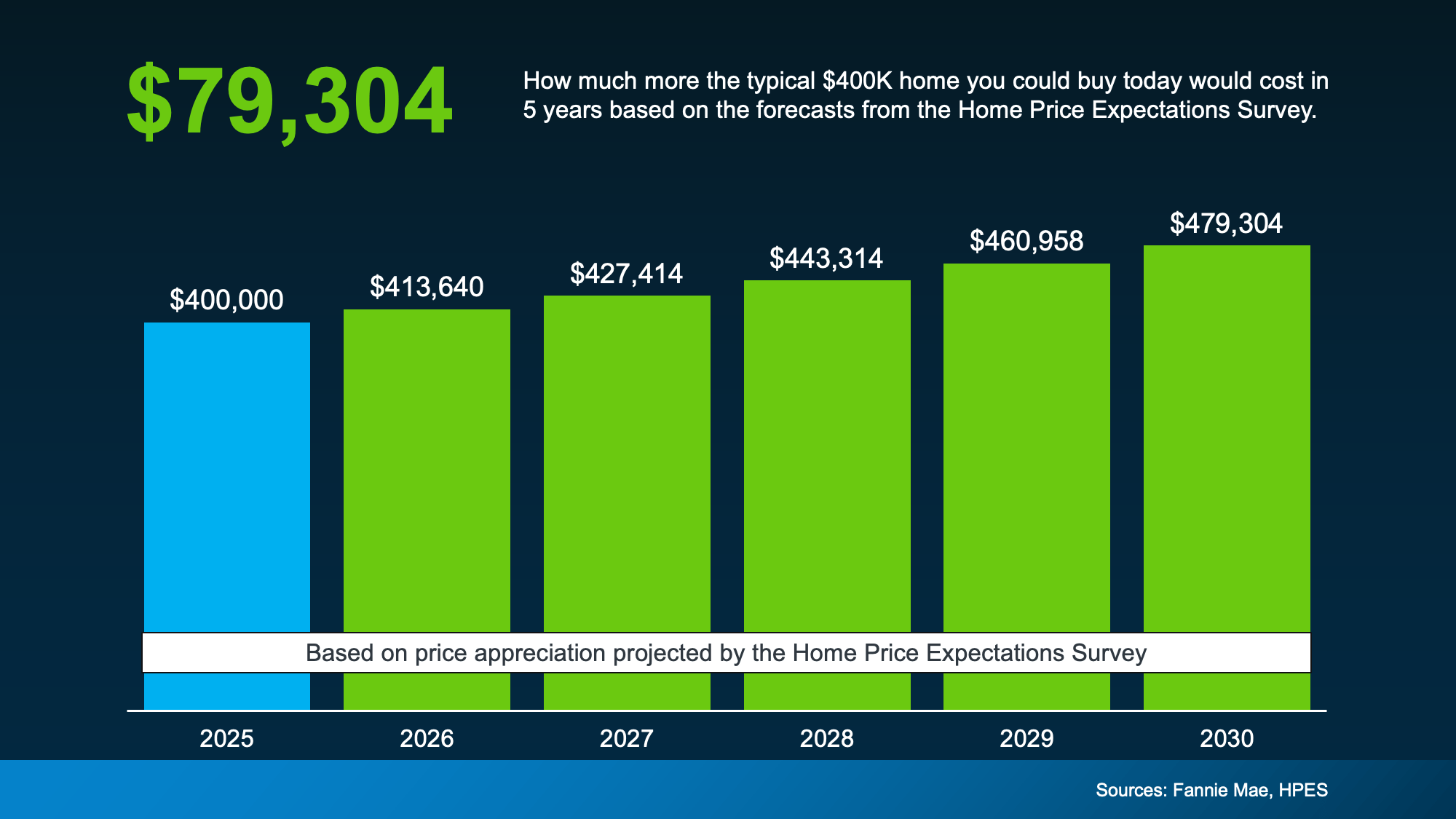
Each quarter, Fannie Mae asks more than 100 housing market experts to weigh in on where they project home prices are headed. And the consensus is clear. Home prices are expected to rise through at least 2029 (see graph below):

a graph of a graph showing the price of risingWhile those projections aren’t calling for big increases each year, it’s still an increase. And sure, some markets may see flatter prices or slower growth, or even slight dips in the short term. But look further out. In the long run, prices almost always rise. And over the next 5 years, the anticipated increase – however slight – will add up fast.

Here’s an example. Let’s say you’ll be looking to buy a roughly $400,000 house when you move. If you wait and move 5 years from now, based on these expert projections, it could cost nearly $80,000 more than it would now (see graph below):

That means the longer you wait, the more your future home will cost you.
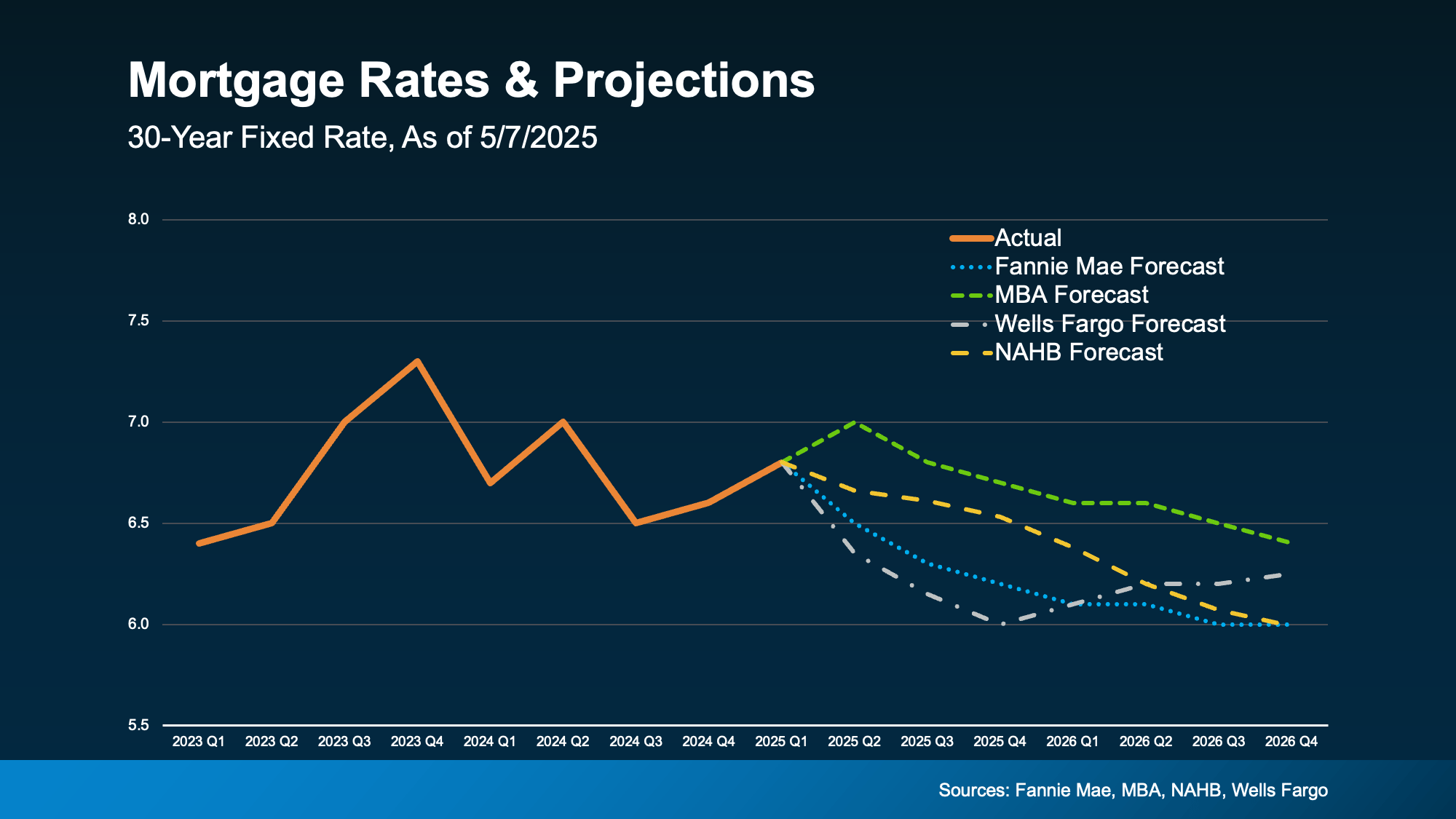

If you know a move is likely in your future, it may make sense to really think about your timeline. You certainly don’t have to move now. But financially, it may still be worth having a conversation about your options before prices inch higher. Because while rates are expected to come down, it’s not by much. And if you’re holding out in hopes we’ll see the return of 3% rates, experts agree it’s just not in the cards (see graph below):

a graph with lines and numbersSo, the question really isn’t: “why would I move?” It’s: “when should I?” – because when you see the real numbers, waiting may not be the savings strategy you thought it was. And that’s the best conversation you can have with your trusted agent right now.

Bottom Line

Keeping that low mortgage rate is smart – until it starts holding you back.

If a move is likely on the horizon for you, even if it’s a few years down the line, it’s worth thinking through the numbers now, so you can plan ahead.

What other price point do you want to see these numbers for? Let’s have that conversation, so I can show you how the math adds up. That way, you can make an informed decision about your timeline.

Why the 20% Down Payment Myth has been Debunked

Saving up to buy a home can feel a little intimidating, especially right now. And for many first-time buyers, the idea that you have to put 20% down can feel like a major roadblock.

But that’s actually a common misconception. Here’s the truth.

Do You Really Have To Put 20% Down When You Buy a Home?

Unless your specific loan type or lender requires it, odds are you won’t have to put 20% down. There are loan options out there designed to help first-time buyers like you get in the door with a much smaller down payment.

For example, FHA loans offer down payments as low as 3.5%, while VA and USDA loans have no down payment requirements for qualified applicants, like Veterans. So, while putting down more money does have its benefits, it’s not essential. As The Mortgage Reports says:

“. . . many homebuyers are able to secure a home with as little as 3% or even no down payment at all . . . the 20 percent down rule is really a myth.

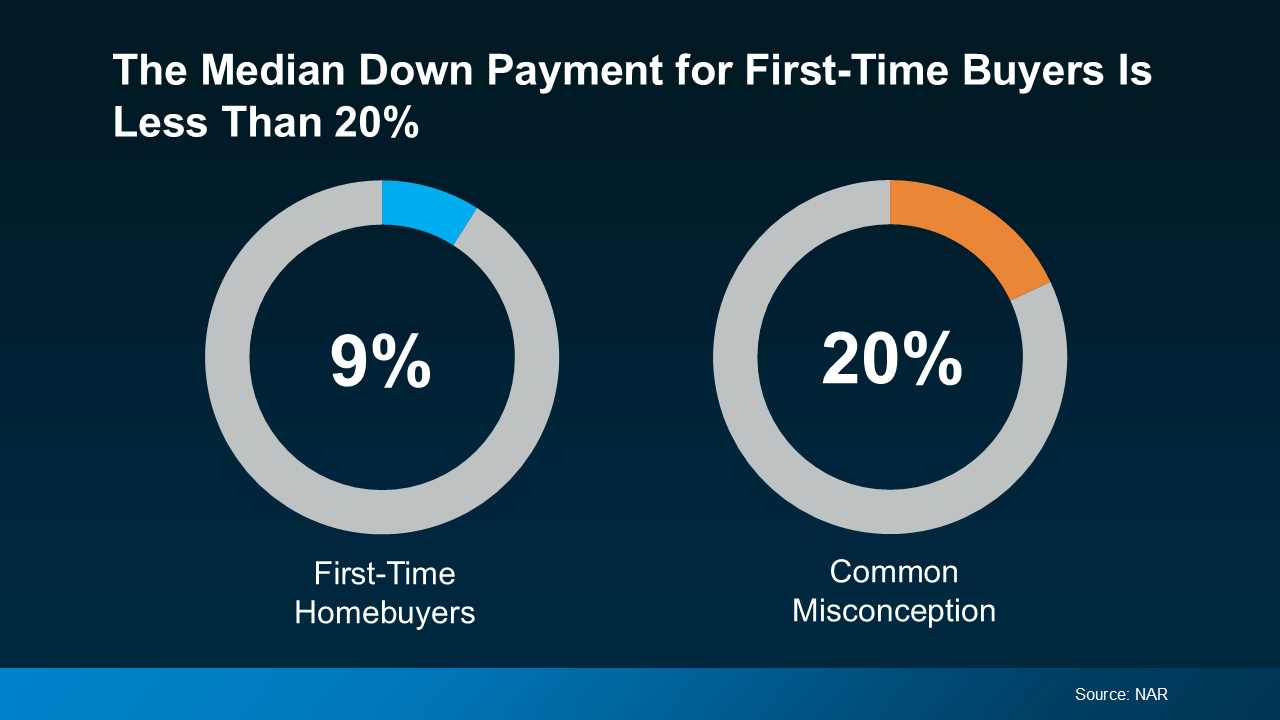
According to the National Association of Realtors (NAR), the median down payment is a lot lower for first-time homebuyers at just 9% (see chart below):

The takeaway? You may not need to save as much as you originally thought.  
And the best part is, there are also a lot of programs out there designed to give your down payment savings a boost. And chances are, you’re not even aware they’re an option.

Why You Should Look into Down Payment Assistance Programs

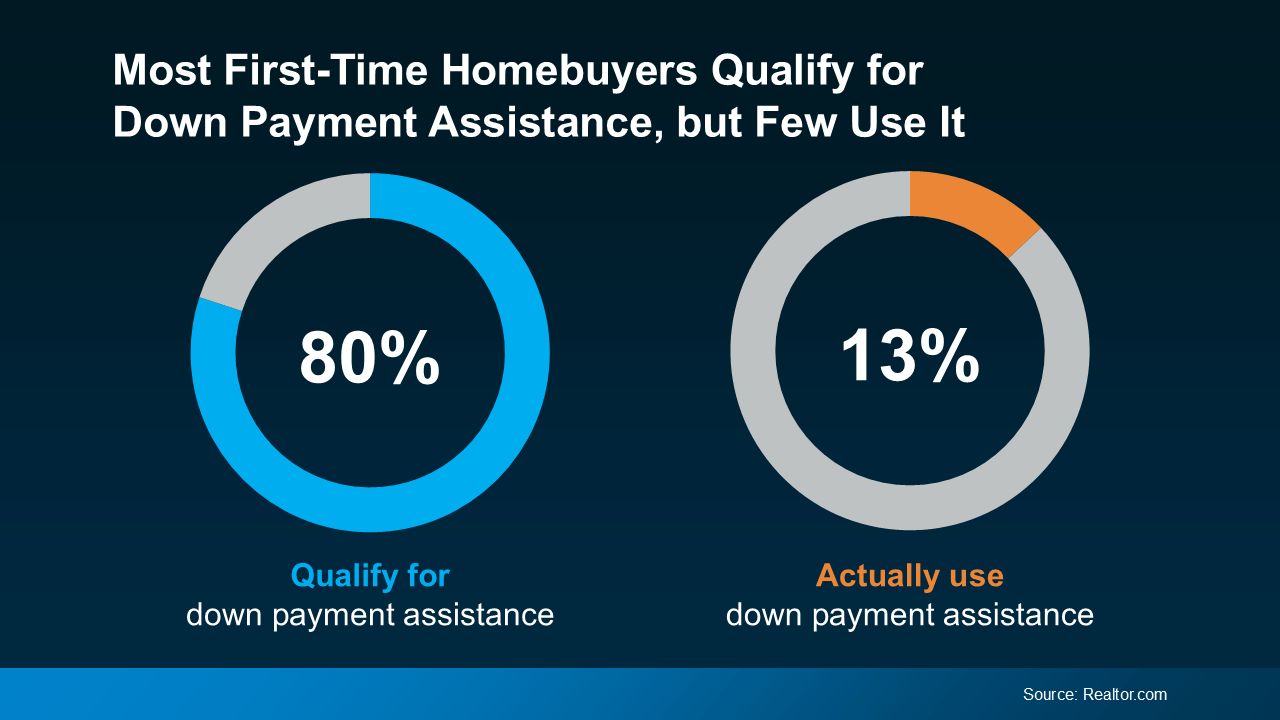
Believe it or not, almost 80% of first-time homebuyers qualify for down payment assistance (DPA), but only 13% actually use it (see chart below):

a blue and orange pie chartThat’s a lot of missed opportunity. These programs aren’t small-scale help, either. Some offer thousands of dollars that can go directly toward your down payment. As Rob Chrane, Founder and CEO of Down Payment Resourceshares:

Our data shows the average DPA benefit is roughly $17,000. That can be a nice jump-start for saving for a down payment and other costs of homeownership.”

Imagine how much further your homebuying savings would go if you were able to qualify for $17,000 worth of help. In some cases, you may even be able to stack multiple programs at once, giving what you’ve saved an even bigger lift. These are the type of benefits you don’t want to leave on the table.

Bottom Line

Saving up for your first home can feel like a lot, especially if you’re still thinking you have to put 20% down. The truth is that’s a common myth. Many loan options require much less, and there are even programs out there designed to boost your savings too.

To learn more about what’s available and if you’d qualify for any down payment assistance programs, talk to a trusted lender.

Things You Can Do When Mortgage Rates Are a Moving Target

Have you seen where mortgage rates have been lately? One day they go down a little. The next day, they go back up again. It can feel confusing and even frustrating if you’re trying to decide whether now’s a good time to buy a home.

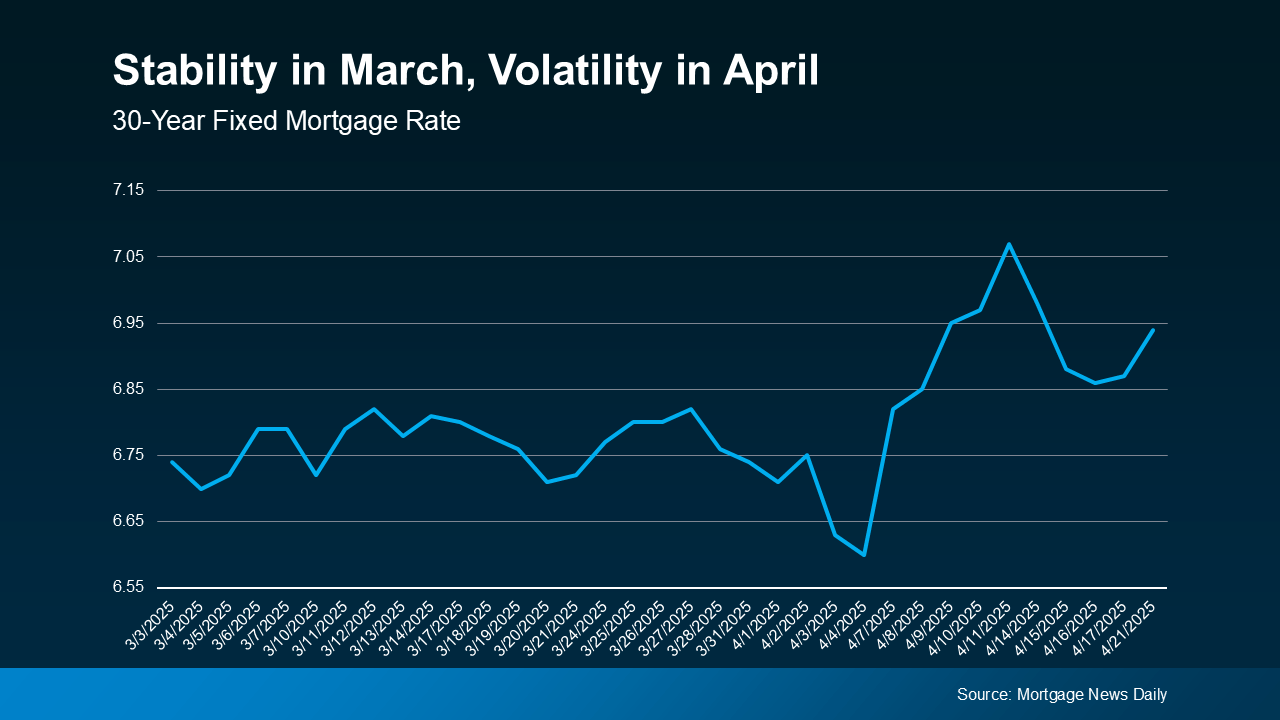
Take a look at the graph below. It uses data from Mortgage News Daily to show that after a relatively stable month of March, mortgage rates have been on a bit of a roller coaster ride in April:

This kind of up-and-down volatility is expected when economic changes are happening.


And that’s one of the reasons why trying to time the market isn’t your best move. You can’t control what happens with mortgage rates. But you’re not powerless. Even with all the economic uncertainty right now, there are things you can do.

You can control your credit score, loan type, and loan term. That way, you can get the best rate possible in today’s market.

Your Credit Score

Your credit score can really affect the mortgage rate you qualify for. Even a small change in your score can make a big difference in your monthly payment. Like Bankrate says:

“Your credit score is one of the most important factors lenders consider when you apply for a mortgage. Not just to qualify for the loan itself, but for the conditions: Typically, the higher your score, the lower the interest rates and better terms you’ll qualify for.”

Keeping your credit score up is key when it comes to qualifying for a home loan. If you’re not sure where your score stands or how to improve it, talk to a loan officer you trust.

Your Loan Type

There are also different types of loans out there, and each one comes with unique requirements for qualified buyers. The Consumer Financial Protection Bureau (CFPB) explains:

“There are several broad categories of mortgage loans, such as conventional, FHA, USDA, and VA loans. Lenders decide which products to offer, and loan types have different eligibility requirements. Rates can be significantly different depending on what loan type you choose. Talking to multiple lenders can help you better understand all of the options available to you.

Always work with a mortgage professional to figure out which loan makes the most sense for you and your financial situation.

Your Loan Term

Just like there are different loan types, there are also different loan terms. Freddie Mac puts it like this:

“When choosing the right home loan for you, it’s important to consider the loan term, which is the length of time it will take you to repay your loan before you fully own your home. Your loan term will affect your interest rate, monthly payment, and the total amount of interest you will pay over the life of the loan.

Most lenders typically offer 15, 20, or 30-year conventional loans. Be sure to ask your loan officer what’s best for you.

Bottom Line

You can’t control what’s happening with the economy or mortgage rates, but you can work with a trusted lender and take steps that’ll help you get the best rate possible.

Let’s connect to talk about what you can do today to put yourself in a strong spot for when you’re ready to buy a home.

Pre-Approval May Be More Important Than Ever This Spring

Spring is here, and so is the busiest season in real estate. More buyers are out looking for homes, which means more competition for you. If you want to put yourself in the best position to buy, there’s one step you can’t afford to skip, and that’s getting pre-approved for a mortgage.

Some buyers think they can wait until they’ve found a home they love before talking to a lender. But in a season where homes can sell fast, that’s a risky move. Getting pre-approved before you start your search is a much better bet.

Here’s what you need to know about this early step in the buying process.

What Is Pre-Approval?

Pre-approval gives you a sense of how much a lender is willing to let you borrow for your home loan. To determine that number, a lender starts by looking at your financial history. Here are some of the things that can have an impact, according to Yahoo Finance:

  • Your debt-to-income (DTI) ratio: This is how much money you owe divided by how much money you make. Usually, you can borrow more if you have a lower DTI.
  • Your income and employment status: They’re looking to verify you have a steady income coming in – that way they feel confident in your ability to repay the loan.
  • Your credit score: If your score is higher, you may qualify to borrow more.
  • Your payment history: Do you consistently pay your bills on time? Lenders want to know you’re not a risky borrower.

After their review, you’ll get a pre-approval letter showing what you can borrow. Having this peace of mind is a big deal – it helps you feel a lot more confident in your ability to get a home loan. And the fringe benefit is it can also speed up the road to closing day because the lender will already have a lot of your information.

It Helps You Figure Out Your Budget

Spring is a competitive season, and emotions can run high if you find yourself up against other buyers. Having a firm budget in mind is so important. You don’t want to get too attached and end up maxing out what you can borrow. As Freddie Mac explains:

“​Keep in mind that the loan amount in the pre-approval letter is the lender’s maximum offer. Ultimately, you should only borrow an amount you are comfortable repaying.”

So, use this time to really buckle down on your numbers. And be sure to factor in other homeownership costs – like property taxes, insurance, and maybe even homeowner’s association fees – so you know what you can comfortably afford.

Then, partner with your agent to tailor your search to homes that match your budget. That way, you don’t fall in love with a house that’s out of your financial comfort zone.

It Helps Your Offer Stand Out During the Busy Season

Spring buyers aren’t just competing for homes. They’re competing for the seller’s attention, too. And a pre-approval letter can help you stand out by showing sellers you’ve already gone through a financial check. Zillow explains it like this:

“Having a pre-approval letter handy while you’re shopping for a home can also help you act quickly once you’ve found a home you love. The letter shows potential sellers that you’re a serious buyer who has the financial means to close on the home. In a competitive market, an offer with a pre-approval letter attached will stand out among other offers that don’t include one — increasing the chances of your offer being accepted.”

That means when sellers are choosing among multiple offers, yours could rise to the top simply because you’ve already taken this step.

And here’s one final tip for you. After you receive your letter, avoid switching jobs, applying for new credit cards or other loans, co-signing for loans, or moving money in or out of your savings. That’s because any changes to your finances can affect your pre-approval status.

Bottom Line

If you’re thinking about buying a home this spring, getting pre-approved should be your first move. It’ll help you understand your budget, show sellers you’re serious, and keep you from falling in love with a house that’s out of reach. Talk to a lender to get started.

What’s your plan to stand out in this competitive market? Let’s chat about how to make sure you’re fully ready to buy.


Is a second opinion a prudent choice?

Getting pre-approved for a mortgage is a vital step in the homebuying process. While many buyers rely on online calculators or their first pre-approval offer, these tools and initial approvals might not always provide the best options. If you’re serious about making a smart financial decision, seeking a second opinion from a trusted mortgage officer is a step worth taking.

Why a Second Opinion Matters 

Your first pre-approval might feel like a green light to move forward, but it’s important to remember that not all lenders offer the same terms. A second opinion could uncover better interest rates, saving you thousands of dollars over the life of your loan. Additionally, it might provide access to unique loan programs tailored to your financial needs or even reveal ways to reduce upfront fees.

Benefits Beyond the Numbers 

Working with a second mortgage officer can also lead to better service. A recommended professional often offers personalized guidance, quicker closing times, and local market-specific expertise. These advantages not only ease the stress of buying a home but can also make you a stronger contender in competitive markets.

Flexibility and Peace of Mind 

Sometimes, a second lender may offer greater flexibility with credit scores or loan terms. This can be especially valuable if your financial situation isn’t straightforward. Ultimately, knowing you’ve explored all your options gives you confidence that you’ve secured the best deal possible.

Addressing Concerns About Credit Scores

Many buyers worry that seeking a second opinion could negatively impact their credit score due to an additional inquiry. However, credit bureaus treat multiple mortgage inquiries within a short time frame, usually 14-45 days, as a single inquiry, so your score is unlikely to be affected. Additionally, the costs associated with getting a second opinion are often minimal or negligible, especially when compared to the potential savings from better rates, lower fees, or improved loan terms. Taking this step is a low-risk, high-reward move that ensures you’re making the most informed financial decision.

Take the Next Step 

Choosing the right mortgage is just as important as choosing the right home. Don’t settle for the first pre-approval without ensuring it’s the best fit for you. Ask your real estate agent for a recommendation of a trusted mortgage officer who can provide you with a thorough and professional second opinion. It’s a simple step that could make a significant difference in your home buying journey!