Why You Should Buy First Before You Sell Your Home

Selling your current home before buying a new one can feel like a delicate balancing act. The challenges of juggling showings, deadlines, and temporary housing often add unnecessary stress to an already overwhelming process. But what if you could buy your new home before selling your current one? Thanks to recent changes in underwriting guidelines, this is now a reality for many sellers.

The “Buy Before You Sell” program offers a solution to common pain points:

  • No Contingency Offers: Offers contingent on selling your current home are often less attractive to sellers. With this program, you can make competitive, contingency-free offers.
  • Less Disruption at Home: Avoid inconvenient showings and the need to keep your home meticulously staged while balancing daily family life.
  • Time to Secure a Better Offer: Without the pressure of deadlines, you can hold out for a strong offer on your current home rather than settling for less.
  • Freedom to Find Your Dream Home: You don’t have to rush to buy a home that isn’t the right fit just because time is running out.
  • Avoid Lease-Back Clauses – Skip the complications of negotiating lease-back agreements with buyers.
  • No Temporary Housing or Double Moves – Eliminate the hassle of renting or finding short-term housing and avoid moving twice.
  • Easier Home Staging – Once you’ve moved out, you can neutralize your home’s d�cor, making it more appealing to a broader range of buyers.
  • Quicker Sales and Higher Prices – Vacant homes not only sell faster but often for higher prices when presented neutrally.

The “Buy Before You Sell” program provides significant advantages to sellers:

  • Access to Home Equity – Sellers can unlock some of their current home’s equity to fund the purchase of their new home.
  • Debt Flexibility – Lenders may exclude your current mortgage payment from debt calculations when underwriting the new loan, which can make qualifying for your next home easier.
  • More Time and Control – The program gives you the freedom to manage your timeline, reducing stress and allowing for well-thought-out decisions.

A Stress-Free Transition 

This approach not only relieves the financial and logistical pressures of selling but also gives you the flexibility to make the best decisions for your family. It ensures that you’re not compromising on your next home or your selling price and allows for a smoother, more comfortable transition into your new space.

If you’re planning to sell your current home and buy a new one, ask your real estate agent or trusted lender about the “Buy Before You Sell” program. It could be the key to a stress-free, seamless move.

If you need a recommendation for a trusted mortgage lender who can help you buy before you sell, give me a call.  And of course, we will be happy to provide you with a complimentary market analysis so you’ll know how much equity you have available.

Why You Shouldn’t Skip Your Home Inspection

When you finally find the home you want to buy, it’s easy to get caught up in the excitement. You’ve toured the place, imagined your furniture in it, maybe even pictured your morning coffee on the porch. The last thing you want is to slow down the process with more steps or lose out to another buyer’s offer because they skipped their inspection.

But here’s the thing. Buying a home is one of the biggest financial decisions you’ll ever make. And no matter how perfect that house seems, skipping a home inspection is a risk that could cost you a lot more than just time.

What Exactly Is a Home Inspection?

A home inspection gives you a detailed look at the home’s condition, usually after your offer’s accepted but before closing. While what’s covered varies by state, an inspector usually goes over the home’s major systems and structure, including things like the roof, foundation, plumbing, electrical, HVAC, and more.

Why an Inspection Is Worth It

Here’s a quick rundown of some of the biggest benefits of getting an inspection.

  • Helps you avoid unpleasant surprises. A house might seem move-in ready, but could have issues you didn’t see during your walkthrough. Knowing about these before closing day is important. That way, you have a better idea of what work may need to be done to the home.
  • Gives you negotiating power. Depending on what the inspection turns up, you may want to re-negotiate with the seller. For that, lean on your agent. With their help, you can ask the seller to handle repairs before closing day or provide a credit so you can take care of them yourself.
  • Offers you peace of mind. Buying a home is emotional, especially if you’ve been searching for a while. An inspection helps take some of the uncertainty off your plate, so you can move forward with confidence.

A few hundred dollars upfront for the home inspection could save you thousands in surprise repairs later. As the National Association of Realtors (NAR) says:

“Failure to obtain a home inspection could potentially cost you a great deal of money and hassles in the long run.”  

Why You Don’t Want To Waive Your Inspection

According to the latest data from NAR, nearly 1 in 4 buyers are waiving (or removing) the inspection contingency when they buy a home. And with spring being peak homebuying season and buyer activity already heating up, you may be thinking about doing that yourself. As Realtor.com points out:

“ . . . if you’re in a hot real estate market where homes are getting multiple offers, there might be a temptation to skip an inspection when you really want the house. However, waiving a home inspection comes with sizable risks.”

But skipping the inspection is a gamble that doesn’t necessarily pay off. Just remember, there are other ways to make your offer attractive to sellers, like being flexible with the closing date. Before making an offer, talk to your agent about other ways to get a seller’s attention without sacrificing your peace of mind.

Bottom Line

Even if skipping an inspection sounds like a way to make your offer more competitive or speed things up, it’s risky. It’s not just extra time and documentation, it’s a smart step that protects your wallet, your investment, and your future.

If you could ask a home inspector one question before buying, what would it be? Let me know and I’ll make sure it’s the first thing we bring up.

Do Your Retirement Plans Fit Your Current Home?

Retirement isn’t just a milestone. It’s the beginning of something really special. After years of hard work, it’s finally time to slow down, explore new passions, and live life on your own terms.

But with this exciting chapter comes some big choices. And one of the biggest is this: does your current home still make sense for the lifestyle (and budget) you want in this next phase of life?

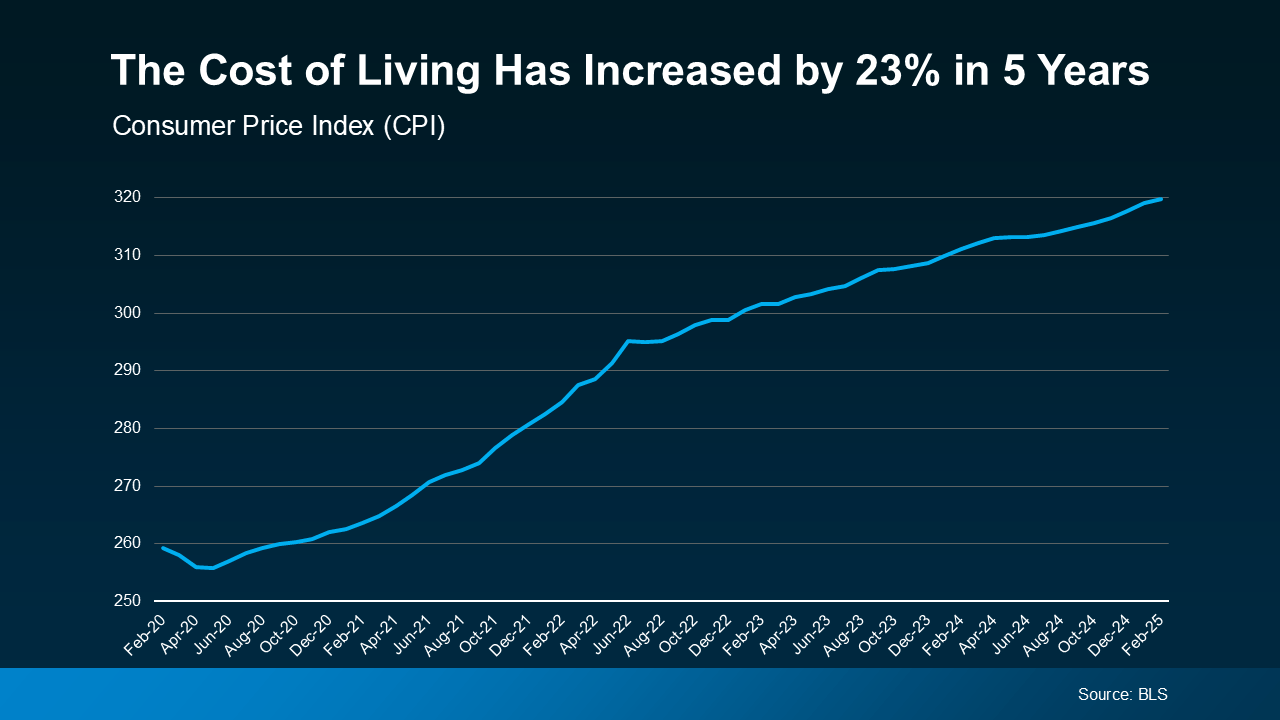
That’s an especially important question right now. Just in the past five years, the cost of living has jumped by 23% according to the Bureau of Labor Statistics (BLS). That’s based on the Consumer Price Index (CPI), which is how changes are tracked in the average price consumers pay for goods and services (see graph below):

a graph with a line going upWhen you’re thinking about how to make your retirement savings last, those rising expenses matter. And if you’ve started to wonder whether your money will stretch as far as you need it to go, don’t worry. You may have more control than you think.

One way many retirees are protecting their savings is by relocating. Because your dollars do go further in some places.

Moving to an area with a lower cost of living can help you save on regular expenses like your housing, utilities, and taxes – especially if you downsize at the same time.

And that can free up room in your budget for the things that make retirement some of the best years of your life: travel, hobbies, spoiling your grandkids, or any of the other things you’ve been dreaming about doing in this next phase.

That’s not to say you have to move. It just means you’ll want to think about where you plan to live and make sure you’ve got enough savings to cover actually living there. It’s all about planning. As Go Banking Rates explains:

“How much you should have saved for retirement depends on a few key factors, including your location. Where you choose to spend your golden years is critical.”

And you don’t always have to go far. Sometimes it’s out of state, but other times moving to the suburbs instead of living near the city can make a big difference. And that’s worth thinking about as you plan for your next chapter.

Whether you’re considering downsizing, moving closer to your grandkids, or heading to an area where you can stretch your savings, a real estate agent can help. They’ll work with you to explore the options that make sense for your goals – and can help make selling your current house easier. They can also connect you with trusted agents in other parts of the country if you’re considering a big move.

Bottom Line

You’ve worked hard to build a future you can enjoy. If your current home or location no longer supports that, it may be time to explore what’s next.

What does your ideal retirement look like? And could a move help make it even better? Let’s talk about how to make that vision a reality.

Here’s Why House Hunting Just Got Easier

If you’ve been frustrated by the lack of homes for sale over the past few years, here’s some good news. You have more options, so it may finally be time to kick off your home search again. As Daryl Fairweather, Chief Economist at Redfin, explains:

“Now is the best time to buy in the last two years. Mortgage rates are comparable to what they were two years ago, and prices remain high. However, there is significantly more inventory . . .”

The number of homes for sale has grown compared to last year, and even more options are on the way. While this is typical for the busy spring season, here’s why this is so important right now.

Homeowners are listing their houses at the highest pace we’ve seen in a while.

New Listings Are on the Rise

Over the past few months, the number of new listings, or homes that have recently been put on the market for sale, has been steadily rising (see graph below):

a graph of a number of blue and green barsBasically, more people are putting their homes on the market each month – whether they’re moving up, downsizing, or relocating. And this trend is a positive sign for the housing market.

Sellers who may have been on the fence the past few years are starting to jump back in. That’s helping to boost overall inventory and create better opportunities for both buyers and move-up sellers alike.

But it’s not just that the number of fresh options is up month-over-month; there’s also been a jump compared to last year.

According to Realtor.com, new listings in March were 10.2% higher than last year, making it the biggest March for new listings since 2021 (see graph below):

For anyone who’s been waiting for more choices, this is exactly what you’ve been hoping for – because more homes coming onto the market means more options and a better shot at finding one that fits your needs.

To make sure you don’t miss out on any of the latest listings for your area, lean on a local real estate agent.

Bottom Line

If you’re thinking about making a move this spring, now may be the time to start exploring your options. With more fresh listings hitting the market, you may find a home you love waiting for you.

What features or neighborhoods are at the top of your wish list?

An ADU can be an Option to Affordability

As home prices and mortgage rates rise, buyers are looking for innovative ways to make homeownership more manageable. One option gaining popularity is the Accessory Dwelling Unit (ADU).

An ADU is an independent living space, often resembling a small apartment or efficiency, located on the same property as a single-family home. It can be attached to the main house, like a basement or garage conversion, or it can stand alone as a detached structure. While not widely known, ADUs offer unique financial and lifestyle benefits that could make homeownership more affordable.

The most significant advantage of an ADU is the potential to generate rental income. By renting out the ADU, buyers can offset their monthly mortgage payments, making homeownership much more attainable.

This can be particularly helpful for first-time buyers or those with moderate incomes who may otherwise struggle to afford a home. Even beyond rental income, ADUs serve as a long-term investment, adding value to the property and increasing its appeal for future buyers.

ADUs aren’t just for young buyers, though, they’re a versatile solution for various lifestyles. Retirees, for example, can generate extra income by renting out the ADU or even maximize their financial potential by moving into the ADU themselves and leasing out the main house.

Families can use ADUs to keep aging parents close while maintaining privacy, and empty-nesters who love to travel can rent out both the main house and ADU seasonally, creating an additional income stream.

While there are challenges to adding an ADU, such as navigating zoning regulations or securing financing, the rewards can far outweigh the initial effort. An ADU can make your property more affordable, generate passive income, and become a valuable investment over time.

If this idea sparks your interest, talk to your real estate agent to explore whether an ADU could work for you. It’s a creative and practical solution that could open the door to homeownership in today’s competitive market.

A Smart Solution for Today’s First-Time Buyers is Townhomes

Buying your first home in today’s market can feel tough. Between high home prices and mortgage rates, affordability is still a big challenge. And some buyers are making one simple trade-off that’s getting them in the door faster: square footage.

According to the National Association of Home Builders (NAHB), 35% of buyers are willing to purchase something smaller to make homeownership happen. And one place you can usually find a smaller footprint (and sometimes better affordability) is in townhomes.

Why Townhomes Are Gaining Popularity

Townhomes typically cost less than single-family homes due to their more limited size. And that’s a big plus for today’s budget-conscious buyer. As Realtor.com says:

“In today’s market, affordability remains a key priority for homebuyers, making townhomes an attractive option because they are often priced more reasonably than single-family homes. It makes them especially appealing to first-time homebuyers on a tighter budget . . .”

So, if you’re trying to buy but feeling stuck because of rising prices, shifting your focus to townhomes could be one way to get into homeownership without maxing out your budget.

Builders Are Responding to the Demand

Builders have seen buyers’ appetite shift to smaller homes, and they’re adjusting to meet the demand. As Joel Berner, Senior Economist at Realtor.com, explains:

“Builders are making a concerted effort to provide smaller, more affordable inventory to the market in a way that the existing-home market cannot. Townhomes are a significant portion of that effort.”

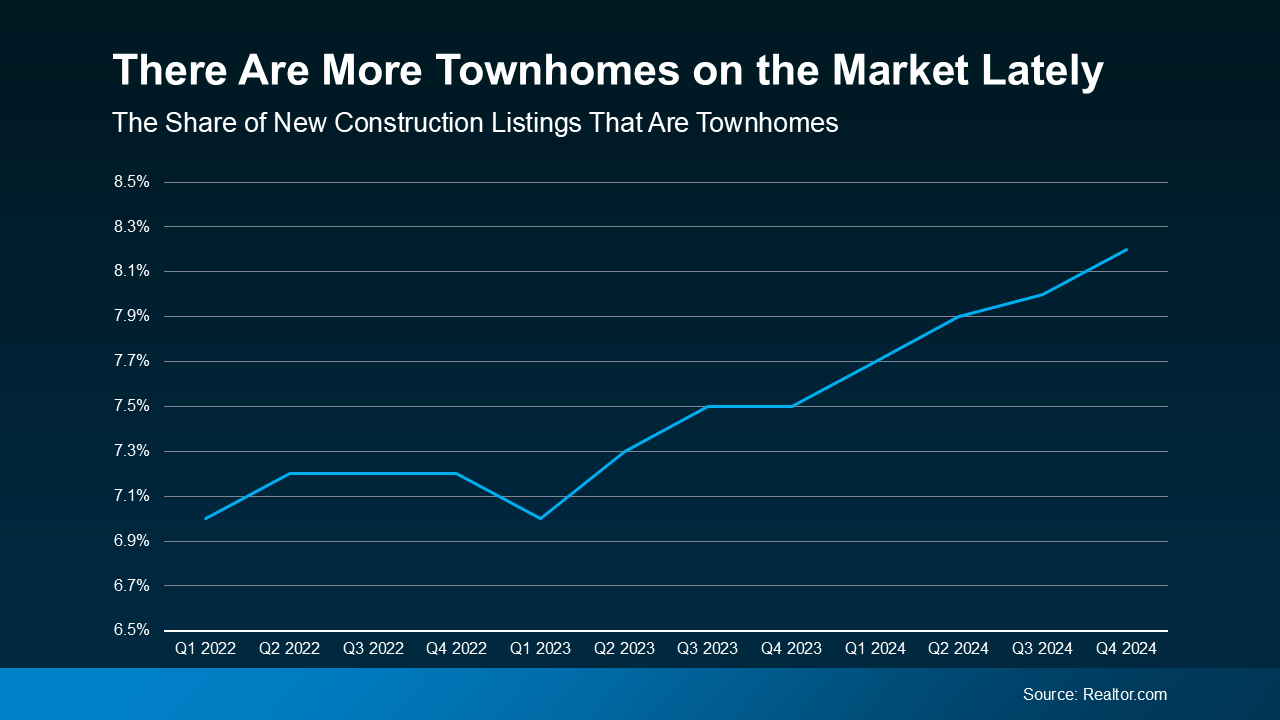
And the numbers back it up. According to data from Realtor.com, townhomes now make up a bigger share of new construction listings than they did just a couple of years ago (see graph below):

a graph of a growing graphThat means, if you’re interested in this type of house, you have more choices than you would have had over the last few years. And more options that are potentially more affordable are definitely a good thing. It should make your search for your first home a bit easier.

Is a Townhome Right for You?

If you’ve been focused only on more traditional homes with their own yards, an agent can help you explore whether a townhome could work for you. Who knows, you may find out you love the lifestyle. A lot of people do. As an article from the National Association of Realtors (NAR) explains:

“Townhomes tend to cost less than single-family detached homes and can be appealing to young professionals who may desire medium-density, walkable neighborhoods.”

That’s because they’re lower maintenance, they can provide a sense of community with other residents, and they have their own unique amenities. Not to mention, they give you the chance to start building wealth through homeownership without the upkeep that comes with having your own detached, single-family home. And that can be great for first-time buyers who are a bit worried about the maintenance anyway.

But they also come with some other considerations, like dealing with noise through shared walls. If you’re a renter right now, maybe you’re used to that already. But these are the types of things you’ll want to think about. And that’s where an agent’s expertise comes in. They’ll help you weigh the pros and cons, so you understand how a townhome fits into your lifestyle and long-term goals before making your decision.

Bottom Line

If you’re struggling to find a home within your budget, it may be time to expand your search and consider options you haven’t before, like townhomes. Sometimes, compromising a little bit on space is worth it to get your foot in the door.

What matters most to you — space, location, or budget? Let’s figure out where you can flex to make homeownership happen.

If You’ve Paused Your Moving Plans, Here’s Why It Might Be Time To Hit Play Again

Last year, 70% of buyers abandoned their home search – and maybe you were one of them. It makes sense. Inventory was low, prices were high, and mortgage rates were up and down like a rollercoaster. All of that made it really hard to find a home you loved – and could afford.

But guess what? The market is shifting.

So, if you paused your moving plans in 2024, it might be time to hit play again. Here’s why.

More Inventory Opens Up More Options

Even if you could make the numbers work, the lack of available homes in recent years probably made it hard to come by something that fit your needs. But inventory is rising, which means you have more options now.

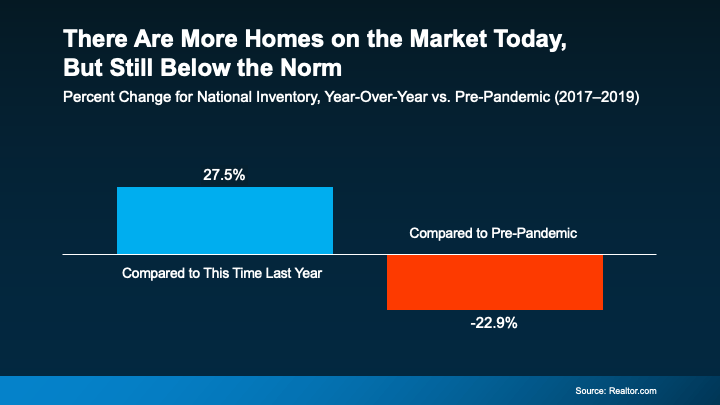
According to Realtor.com, inventory has jumped 27.5% since this time last year (see graph below):

a graph showing the average of a home saleSo, if you were reluctant to list your house because you weren’t sure where you’d go if it sold, you have more choices than you did a year ago. That’s a big win.

Homes Are Staying on the Market Longer, Too

When the supply of homes for sale is low, they’re snatched up quickly because there just aren’t enough of them to go around. And a few years ago, that meant your house could sell overnight. While that’s not always a bad thing, if you’re planning a move and also need to find your next home, a slower pace isn’t the end of the world. In fact, it’s welcome relief.

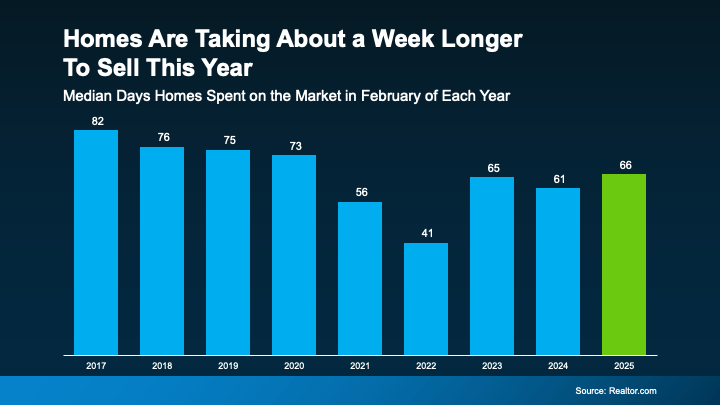
Now that inventory has grown, homes are staying on the market longer, meaning you don’t have to feel as rushed in the process (see graph below):

a graph of blue barsThe latest data shows the typical time homes spent on the market went up by about 8% this year – that’s higher than we’ve seen since 2020, but still a faster pace than before the market ramped up. And it’s about a week longer than last year. Talk about a sweet spot for movers. It may seem like just a few days, but it gives you more flexibility and time to be thoughtful about your decisions. As Hannah Jones, Senior Economic Research Analyst at Realtor.com, notes:

“There are more homes for sale than in the last few years, which means the market pace is a bit more manageable–with longer days on market–and many sellers are more flexible . . . Though buyers face still-high housing costs, they may find a bit more give in the market, which could give them more time to make a decision, even in the busy spring and summer months.”

And if you’re thinking – but wait – doesn’t that mean it will be harder to sell my house? Don’t worry. With inventory still almost 23% below the pre-pandemic norm, well-priced homes are selling, especially as more buyers step back into the game this season.

Bottom Line

With growing inventory, sellers who want to upgrade, downsize, or relocate have more choices. Plus, with less pressure to rush into an offer, it could be a great time to revisit your home search if you’ve put it on hold.

With more homes on the market and more time to make decisions, what else do you need to see in order to kickstart your home search again? Let’s talk about what’s happening in our local market right now.buyingbuying

Rising Homeowner’s Insurance Is Affecting Affordability

For homeowners with mortgages, rising insurance premiums pose a unique and unavoidable challenge. Unlike those who own their homes outright, mortgage holders are required by their lenders to maintain adequate homeowners insurance. This ensures that the lender’s investment in the property is protected in the event of a disaster, but it leaves homeowners with little choice but to absorb the increasing costs.

Between 2020 and 2023, insurance premiums surged by about 20%, and in some high-risk areas, the increases are even steeper. For many, this spike has strained household budgets, adding to the already heavy financial burden of rising interest rates, property taxes, and maintenance costs.

Several factors contribute to these rising costs:

  • Climate Change: The increasing frequency and severity of natural disasters, such as hurricanes and wildfires, have resulted in higher claims, prompting insurers to raise premiums or withdraw from high-risk markets.
  • Construction Costs: Between 2020 and 2023, construction input prices rose by 37.7%, with machinery costs increasing by 12% from 2022 to 2023, leading to more expensive claims for insurers.
  • Regulatory Challenges: In some states, regulatory environments have hindered insurers’ ability to adjust rates in line with escalating risks, causing some companies to exit these markets.

Unfortunately, dropping coverage isn’t an option for mortgage holders. If a homeowner fails to maintain adequate insurance, the lender may purchase a policy on their behalf�often at a much higher cost�adding it to the homeowner’s monthly mortgage payment. This arrangement, known as “force-placed insurance,” typically provides less coverage at a premium rate, compounding the financial strain.

What Can Homeowners Do?

Homeowners feeling the squeeze have several strategies to mitigate the impact of rising insurance costs:

  • Shop Around: Compare policies from multiple insurers to find the most competitive rates.
  • Bundle Policies: Many companies offer discounts for bundling home and auto insurance.
  • Increase Deductibles: Opting for a higher deductible can lower monthly premiums, though it means paying more out-of-pocket for claims.
  • Explore State Programs: In some states, government-backed insurance programs may offer affordable options for high-risk homeowners.

A Call for Broader Solutions

While individual strategies can help, the broader affordability crisis requires systemic solutions. Climate change mitigation, regulatory reforms to stabilize insurance markets, and efforts to control construction costs are all critical to easing the financial burden on homeowners.

If you’re buying a home or already dealing with the strain of rising insurance costs, reach out to your insurance agent or lender to review your options, stay compliant with mortgage requirements, and safeguard your home and financial well-being.

Is a second opinion a prudent choice?

Getting pre-approved for a mortgage is a vital step in the homebuying process. While many buyers rely on online calculators or their first pre-approval offer, these tools and initial approvals might not always provide the best options. If you’re serious about making a smart financial decision, seeking a second opinion from a trusted mortgage officer is a step worth taking.

Why a Second Opinion Matters 

Your first pre-approval might feel like a green light to move forward, but it’s important to remember that not all lenders offer the same terms. A second opinion could uncover better interest rates, saving you thousands of dollars over the life of your loan. Additionally, it might provide access to unique loan programs tailored to your financial needs or even reveal ways to reduce upfront fees.

Benefits Beyond the Numbers 

Working with a second mortgage officer can also lead to better service. A recommended professional often offers personalized guidance, quicker closing times, and local market-specific expertise. These advantages not only ease the stress of buying a home but can also make you a stronger contender in competitive markets.

Flexibility and Peace of Mind 

Sometimes, a second lender may offer greater flexibility with credit scores or loan terms. This can be especially valuable if your financial situation isn’t straightforward. Ultimately, knowing you’ve explored all your options gives you confidence that you’ve secured the best deal possible.

Addressing Concerns About Credit Scores

Many buyers worry that seeking a second opinion could negatively impact their credit score due to an additional inquiry. However, credit bureaus treat multiple mortgage inquiries within a short time frame, usually 14-45 days, as a single inquiry, so your score is unlikely to be affected. Additionally, the costs associated with getting a second opinion are often minimal or negligible, especially when compared to the potential savings from better rates, lower fees, or improved loan terms. Taking this step is a low-risk, high-reward move that ensures you’re making the most informed financial decision.

Take the Next Step 

Choosing the right mortgage is just as important as choosing the right home. Don’t settle for the first pre-approval without ensuring it’s the best fit for you. Ask your real estate agent for a recommendation of a trusted mortgage officer who can provide you with a thorough and professional second opinion. It’s a simple step that could make a significant difference in your home buying journey!

Homeowner’s Insurance – What You Need To Know

Homeowner’s insurance is a must-have to protect what’s probably your biggest investment – your home. And while you never want to think about worst-case scenarios, the right coverage is basically your safety net if something goes wrong. Here’s how it helps you.

  • Covers Repairs and Rebuilding Costs: If your home is damaged by fire, storms, or other covered events, your policy helps pay for repairs or even a full rebuild.
  • Protects Your Belongings: Many policies can also cover personal items like furniture, electronics, and clothing if they’re stolen or damaged.
  • Provides Liability Coverage: If someone gets injured on your property, homeowner’s insurance can help cover medical bills or legal expenses.

In the simplest sense, it gives you peace of mind. Knowing you have protection against unexpected events helps you worry less. And with such a big purchase, having that reassurance is a big deal.

And while your first insurance payment will be wrapped into your closing costs, you’ll want this to be a part of your budget beyond closing day too. That’s because it’s a recurring expense you’ll have once you get the keys to your home.

Here’s what you need to know to help you budget for this important part of homeownership today.

Costs and Claims Are Rising

In recent years, insurance costs have been climbing. According to Insurance.com, there are four big reasons behind the jump in premiums:

  • More severe weather events and wildfires are leading to higher claims.
  • Insurance companies are pulling out of high-risk areas, reducing options for homeowners in some states.
  • Past rate increases haven’t kept up with the rise in claims.
  • The cost to rebuild or repair homes has gone up due to higher material and labor costs.

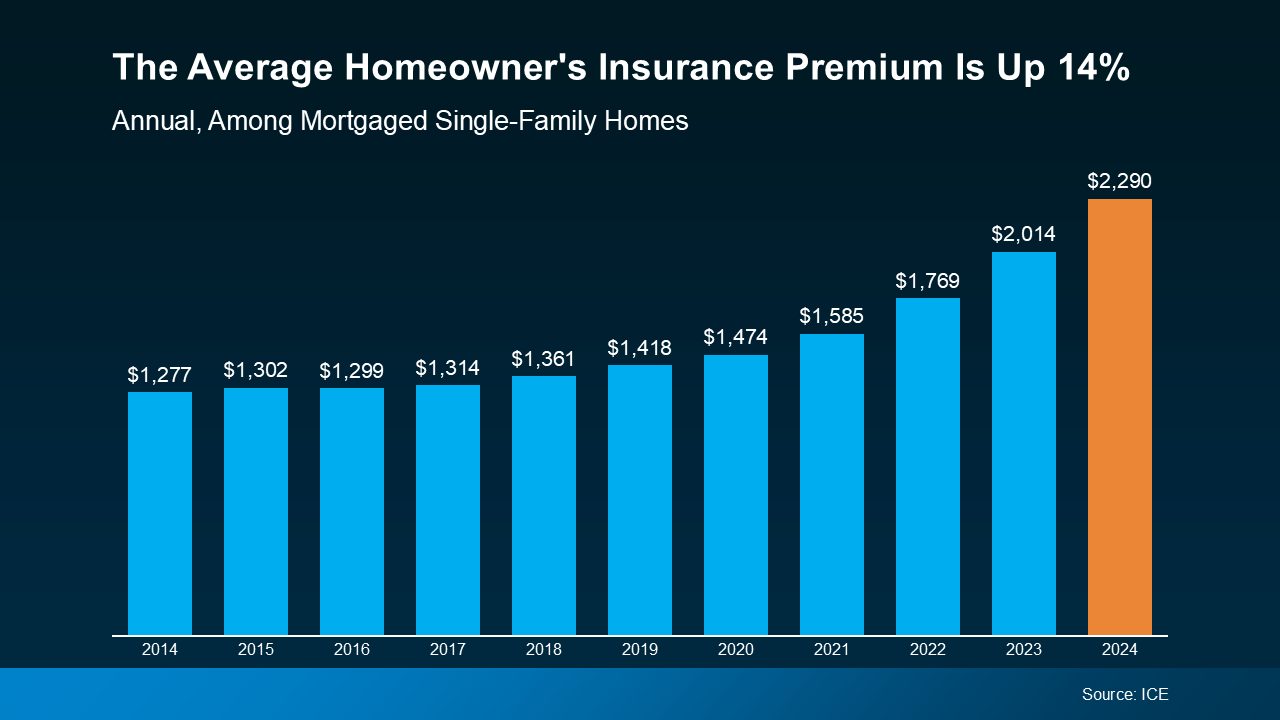
Basically, disasters are happening more often, repairs cost more, and insurers have to adjust their rates to keep up. Data from ICE Mortgage Technology helps paint the picture of how the average yearly premium has climbed over the last decade (see graph below):

What You Can Do About It

Homeowner’s insurance is a must to protect your home and your investment. But with costs rising, you’ll want to do your homework to balance the best coverage you can get at the best price possible.

Homeowner’s insurance rates vary widely based on location, provider, and coverage. Shop around and compare quotes before settling on a policy. And don’t forget to ask about discounts. Things like security systems or bundling with auto insurance could help lower your insurance costs.

Bottom Line

When you’re planning to buy a home, it’s important to look beyond just your mortgage payment. You’ll also want to budget for your homeowner’s insurance policy. It gives you a lot of protection against the unexpected. And while it’s true those costs are rising, there are things you can do to try to get the best price possible.

What’s your biggest concern when it comes to budgeting for homeownership? Let’s talk through it and make sure you’re set up for success.